


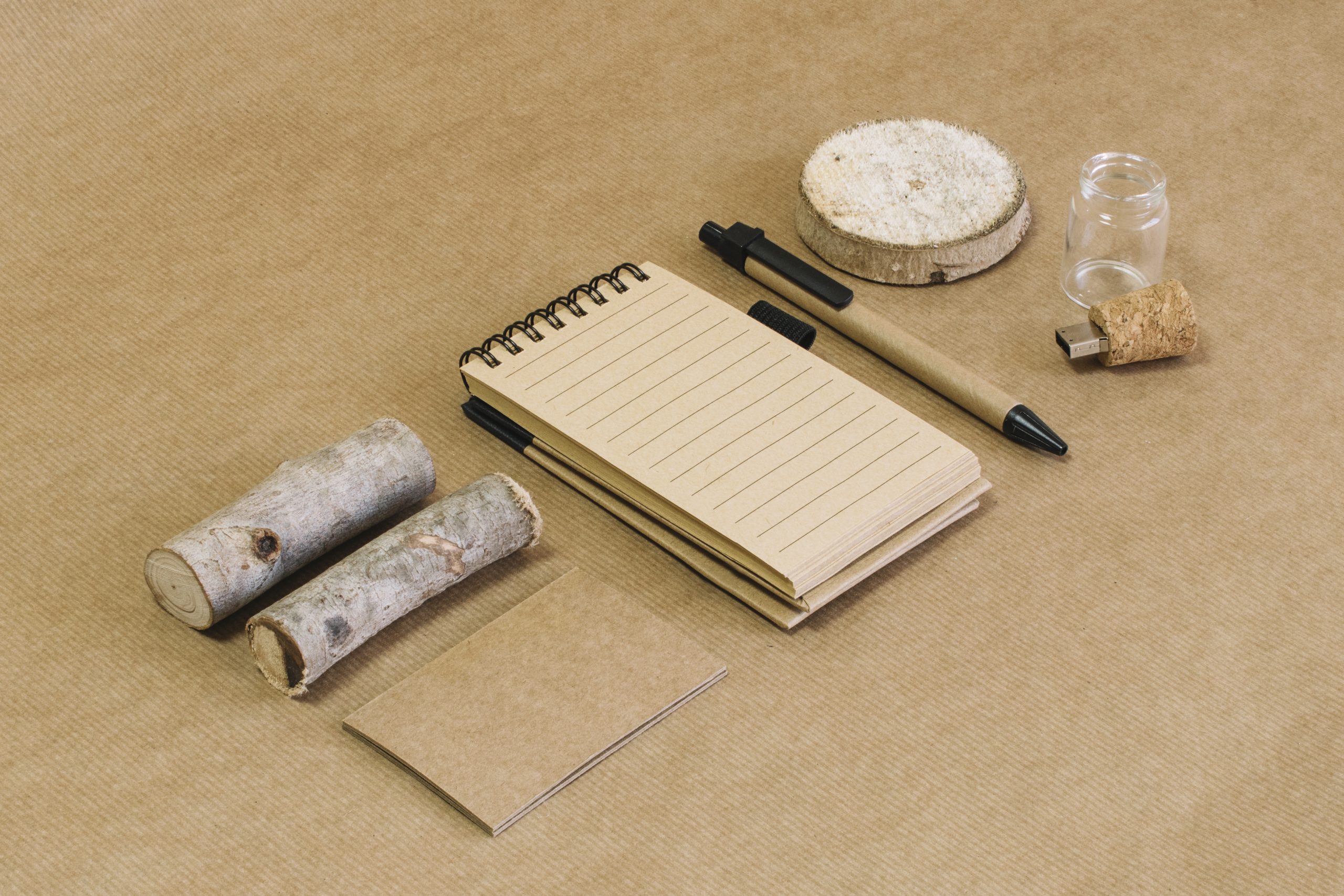
More offices across Kerala are rethinking what goes into their stationery cupboard. It is not just about notebooks and pens anymore — procurement teams are asking whether the paper is recycled, whether the packaging is plastic-free, and whether the vendor can actually back up these claims with real sourcing, not just a green label on the box.
This shift is not surprising. Corporate clients are increasingly expected to report on sustainability practices, schools are teaching students about environmental responsibility, and a growing number of buyers simply prefer products that do not add unnecessary waste. Stationery is a small line item on paper, but across a large office or an entire school system, it adds up fast.
What Makes Stationery Genuinely Eco-Friendly
Not every product marketed as “green” holds up to scrutiny. A few things worth checking before you buy in bulk:
Recycled or responsibly sourced paper — Notebooks and pads made from recycled pulp, or paper sourced from certified sustainable forestry, reduce the environmental footprint without compromising on writing quality.
Minimal or biodegradable packaging — Excess plastic wrapping defeats the purpose. Look for suppliers who package in paper-based or reusable materials.
Refillable and durable products — Refillable pens, long-lasting binders, and reusable folders cut down on the constant repurchasing that drives most stationery waste.
Low-toxicity inks and adhesives — Water-based inks and solvent-free glues are safer for daily handling, especially in schools.
Why This Matters for Offices and Schools in Kerala
Kerala’s institutions — from IT parks in Technopark and Infopark to schools across the state — are under growing pressure to demonstrate responsible sourcing, whether for CSR reporting, accreditation, or simply staying aligned with what employees and parents now expect. Switching to eco-friendly stationery is one of the more visible, low-effort ways to show that commitment, without disrupting daily operations or budgets significantly.
It also tends to be a durability story as much as a sustainability one. Recycled paper notebooks and better-quality refillable products often outlast their cheaper, disposable counterparts, which means fewer reorders over the course of a school year or financial year.
How Harisri Approaches This
At Harisri, sustainability is built into how we manufacture and distribute — not treated as an add-on. Our manufacturing unit follows quality-controlled processes designed to minimise waste, and we work to source materials responsibly wherever possible. As a stationery wholesaler supplying both retail outlets and bulk institutional buyers across Kerala, we can offer eco-conscious options at the same competitive pricing and reliable delivery timelines our clients already count on.
Whether you are outfitting a school for the new academic year or restocking your office supply room, choosing eco-friendly stationery does not have to mean a trade-off between cost, quality, and convenience.
Making the Switch
You do not need to overhaul your entire stationery order overnight. Start with the highest-volume items — notebooks, notepads, and files — since that is where recycled and sustainably sourced alternatives make the biggest difference. From there, layer in refillable pens and low-waste packaging as your regular suppliers can support them.
If you are evaluating your stationery procurement for the year ahead, it is worth asking your current supplier a direct question: can they tell you exactly where the paper comes from? At Harisri, we can.
Looking to switch your office or institution to eco-friendly stationery? Get in touch with Harisri for bulk pricing and product options suited to your needs.